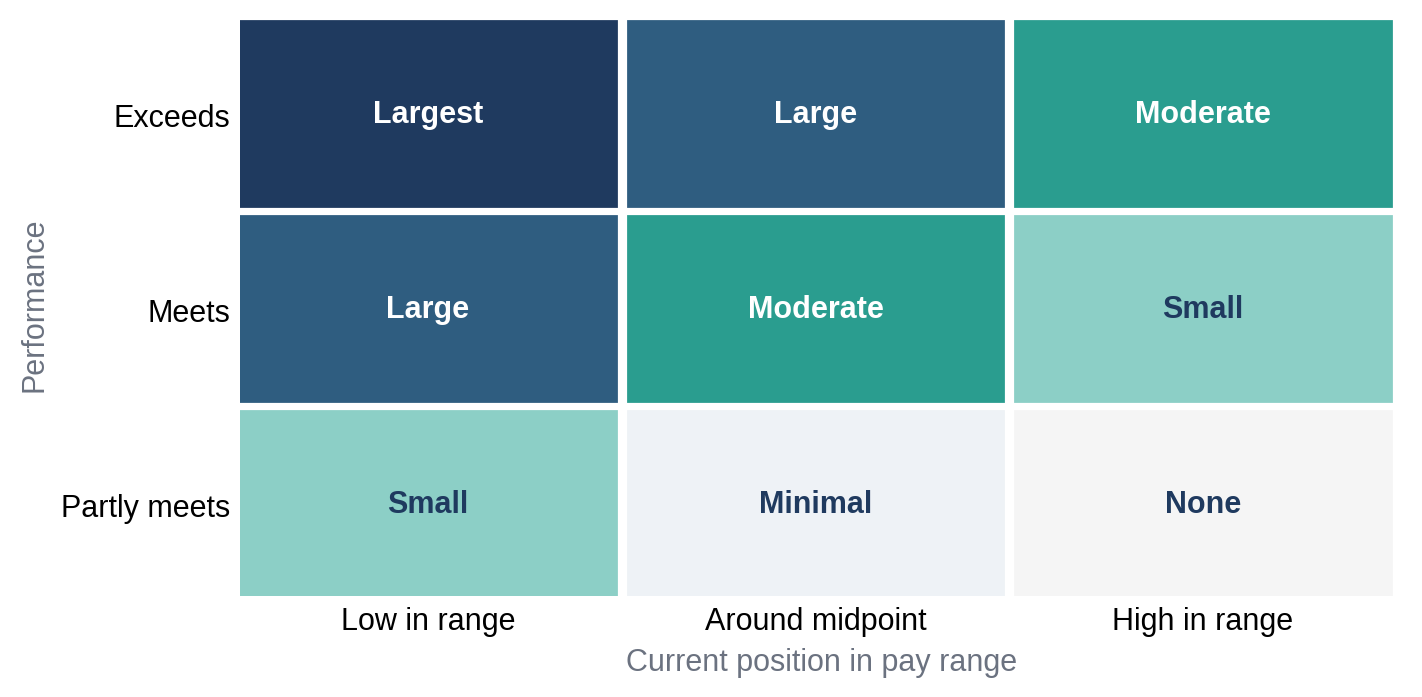
The logic is simple. A strong performer paid below midpoint should move faster towards it. A strong performer already near the top of the range is rewarded mainly through bonus rather than a large permanent increase. Over several cycles, this moves pay towards your intended position without one-off corrections.
Calibrating decisions
Before increases are confirmed, leaders should review proposals across teams. Useful questions include:
- Are similar performance ratings receiving similar increases across departments?
- Is any team consistently more generous than others?
- Are any groups, such as part-year joiners, being overlooked?
- Have high performers who are paid low in their range been prioritised?
Explaining the outcome
The conversation matters as much as the number. Give managers a short guide: the overall budget context, how the matrix works, what drove this person's outcome and what they could do to progress. Managers should hold the conversation in person, not leave the letter to speak for itself.
Employees who receive a modest increase are far more likely to accept it when they understand why, and can see a route to a better outcome next year.
Common mistakes
- Spreading the budget evenly regardless of performance or position
- Ignoring market data until the review is already under way
- Leaving managers to explain decisions they did not understand
- Using the merit budget to fix structural problems such as compression
- Treating the review as an administrative exercise rather than a conversation
How Humatix can help
Humatix supports UAE and GCC employers through the salary review cycle: market data, budget modelling, merit matrix design, calibration support and guidance for managers on communicating outcomes.