Why it matters
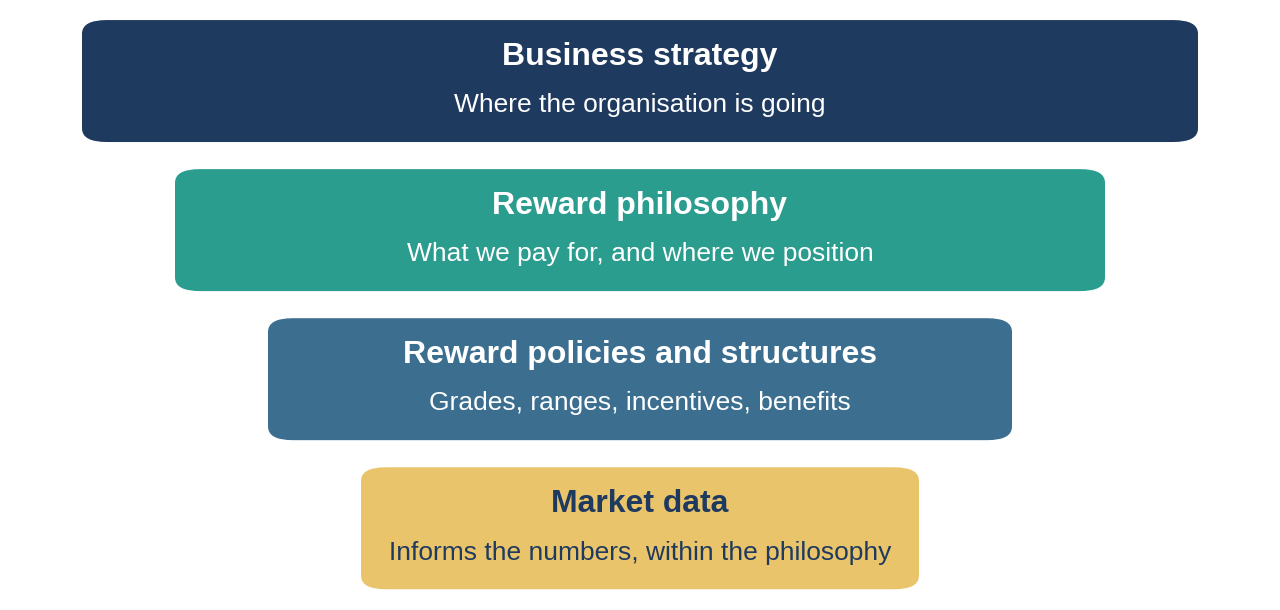
It gives the data a purpose. Benchmark results tell you where the market sits. Only the philosophy tells you where you want to be.
It keeps decisions consistent. When managers push for exceptions, the philosophy is the reference point for saying yes or no.
It makes pay explainable. Employees may not like every outcome, but they can understand the logic behind it.
It survives changes in people. A written philosophy outlasts the leaders who wrote it, so reward does not shift every time the HR or finance head changes.
Writing it
- Start with the business strategy. What does the organisation need from its people over the next few years?
- Agree the market. Which organisations do you compete with for people, by job family?
- Decide the positioning. Where you will sit, and where you are prepared to pay more.
- Set the mix. The balance of fixed pay, variable pay and benefits by level.
- Test it. Check that the philosophy is affordable and that current practice can move towards it.
- Keep it short. One or two pages is enough. If it needs more, it is probably trying to be a policy manual.
Reviewing it
A philosophy is not permanent. Review it when the strategy changes, after a significant acquisition or every few years as a matter of course. But change it deliberately, not because a single year's benchmark data looks different.
How Humatix can help
Humatix helps leadership teams in the UAE and GCC agree a reward philosophy, then uses benchmark data to translate it into salary structures, incentive plans and benefits that fit the organisation's strategy.