
← Back
Rewards3 min read29 October 2026

Long-Term Incentives for Private Companies: Options Beyond Shares

Private companies can reward senior people over several years without issuing shares. Phantom shares, deferred cash and profit-sharing plans compared.

Listed companies can reward executives with shares that vest over several years. Most private and family-owned businesses in the region cannot, or do not want to, give away equity. That does not mean they cannot reward long-term performance or encourage key people to stay. Several plan designs achieve similar aims without changing who owns the business.

What a long-term incentive is for

A long-term incentive links part of a person's reward to results over several years, rather than one. It typically aims to:

  • encourage decisions that build value over time, not just this year's numbers
  • keep key people through a defined period
  • give senior leaders a share in the success they help create

Before choosing a design, decide which of these matters most. A plan built mainly to retain a few individuals looks different from one designed to align a leadership team with long-term growth.
Four designs compared

DesignHow it worksStrengthsWatch out for
Deferred cash bonusPart of the annual bonus is held back and paid in instalments over two to three yearsSimple, cheap to run, strong retention effectFeels less like ownership
Phantom sharesCash awards that track the value of the business as if they were sharesOwnership feel without issuing equityNeeds a credible, regular valuation
Long-term cash planCash award paid if multi-year targets are metClear link to strategic goalsTargets must stay relevant over the period
Profit-sharing poolA share of profits above a threshold, paid over timeEasy to understandRewards short-term profit unless deferred

Making overlapping awards work

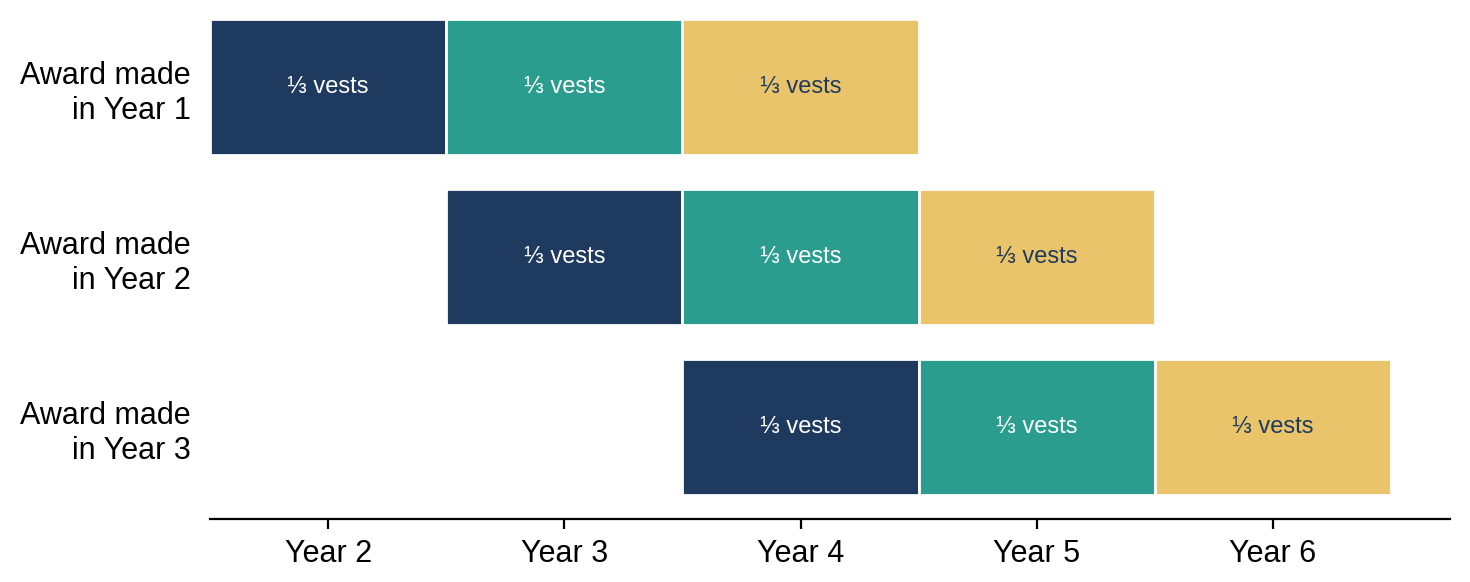
Illustrative: overlapping awards that each vest over three years

Illustrative only: making a new award each year creates a rolling retention effect

Making a new award each year, with each one vesting over three years, means there is always unvested value at stake. That creates a steady retention effect, rather than a single cliff edge when one large award pays out.

Design points that need care

Performance measures. Choose two or three measures that reflect long-term value, such as profit growth, return on capital or delivery of strategic milestones. Avoid duplicating the annual bonus measures.

Valuation. Phantom share plans depend on an agreed, consistent valuation method. Decide in advance who values the business, how and how often.

Leaver rules. Define what happens to unvested awards for resignations, dismissals, retirement and ill health. These rules do much of the retention work.

Affordability. Model the cost under several scenarios, including strong performance, before committing.

Communication. Participants should understand how the plan works and what their awards could be worth. A plan nobody understands has little effect on behaviour.

A word on pay mix

Long-term incentives shift reward from certain to uncertain. In our recent work, some senior executives have shown a preference for stronger fixed pay when the outlook is uncertain. Before introducing a plan, talk to the people it is meant to motivate about how they value deferred reward against fixed pay.

How Humatix can help

Humatix designs long-term incentive plans for private and family-owned businesses in the GCC, from choosing the right structure and measures to modelling cost and drafting plan principles for legal review.

Note: legal or tax advice should be sought on the legal and tax matters referred to in this article, as requirements vary by jurisdiction and change over time.