Making these routes real
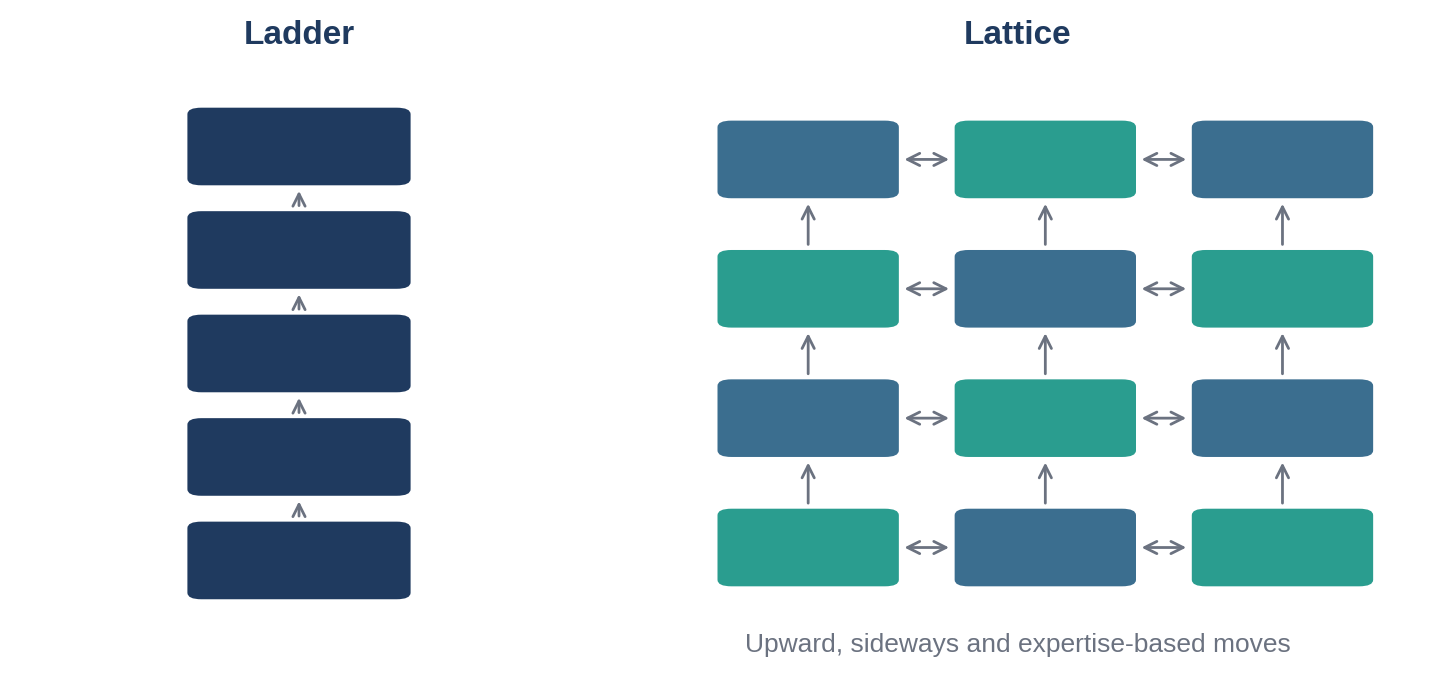
These options only count as growth if the organisation treats them as such.
Recognise them in the career framework. A professional track with defined levels makes expertise-based progression visible and rewarded.
Link them to pay where appropriate. Progression within a professional track should move pay through the range, just as promotion does.
Value lateral moves. If managers see a sideways move as a step back, employees will too. Leaders who have made lateral moves themselves can help change that perception.
Make opportunities visible. Projects, assignments and internal roles should be advertised, not allocated quietly.
Career conversations
Managers play a central role. Many avoid career conversations because they cannot offer a promotion. A better conversation focuses on what the employee wants to learn, the experience that would help them grow and the realistic options available now.
Useful questions include:
- What parts of your work energise you most?
- What skills would you like to build over the next year?
- Which roles or areas of the business interest you?
- What experience would make you a stronger candidate for the roles you want in future?
Measuring progress
Track internal moves, including lateral ones, participation in projects and assignments, and engagement results on career growth. Exit interview data showing people leaving "for development" is a strong signal that internal routes are not visible or credible enough.
How Humatix can help
Humatix designs career frameworks for UAE and GCC organisations, including professional and management tracks, competency-based progression and the link to grading and pay, so that employees can see real routes to grow.