A strong performer asks for a quiet word on a Thursday afternoon. They have an offer, they are sorry, and they have already accepted it. The counter-offer conversation that follows is usually rushed, expensive and too late.
Most UAE employers have been through this more than once. The market makes it more likely than elsewhere: much of the workforce is expatriate and used to moving, new employers arrive every year, and competitors know exactly who your best people are. An employee retention strategy for the UAE has to start before the resignation, not after it.
This article sets out a practical approach in four parts: find out why people really leave, decide which roles matter most, get the pay base right, and then use the rest of the employment offer to give people a reason to stay.
1. Find out why people leave (and why others stay)
Retention plans often rest on assumptions. Leadership believes pay is the problem; employees point to their manager or to a career that has stalled. Before spending money, gather evidence from three places.
- Exit conversations. Ask the same short set of questions every time, and have someone other than the line manager ask them. Look for patterns over a year, not reasons from one departure.
- Stay interviews. Ask valued employees what keeps them, what would tempt them away and what one thing would make their job better. Few organisations do this, and it costs almost nothing.
- Engagement data. Break results down by team, grade and length of service. A healthy company-wide score can hide one department where good people are quietly looking.
UAE packages add a complication. Housing, transport and other allowances are often listed separately from basic salary, so employees can undervalue what they receive and two offers can be harder to compare than they look. Some people who leave "for money" are leaving for a package that is no better, only clearer.
2. Decide where retention effort matters most
Not every resignation hurts the business equally. Spreading the pay review budget evenly leaves your most valuable people feeling overlooked while easier-to-fill roles absorb money they did not need.
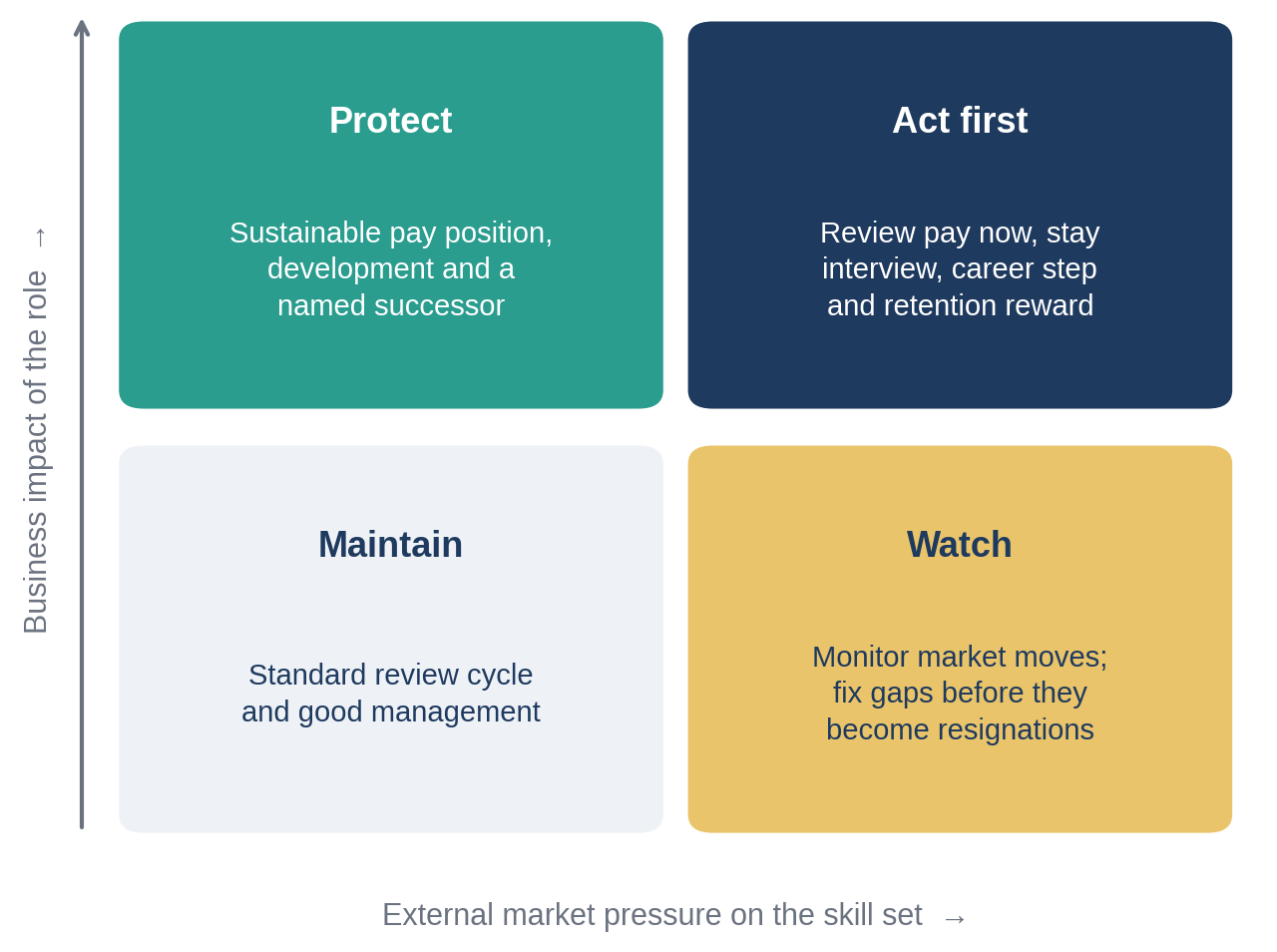
A simple way to sort roles is by two questions: how much would losing this person hurt the business, and how hard is the outside market chasing their skills right now?