← Back
Employee Experience3 min read21 October 2026

Defining an Employee Value Proposition People Recognise

How to define an employee value proposition that matches what employees actually experience, test it with real data and use it consistently.

An employee value proposition, or EVP, is the honest answer to a simple question: why would a capable person choose to work here, and stay? It covers what the organisation offers, including pay and benefits, career growth, the work itself and the culture, and what it expects in return.

Many organisations write an EVP as a marketing exercise. The result reads well on a careers page and means little to the people who already work there. A useful EVP starts from what employees actually experience.

Testing the gap

Testing the employee value proposition

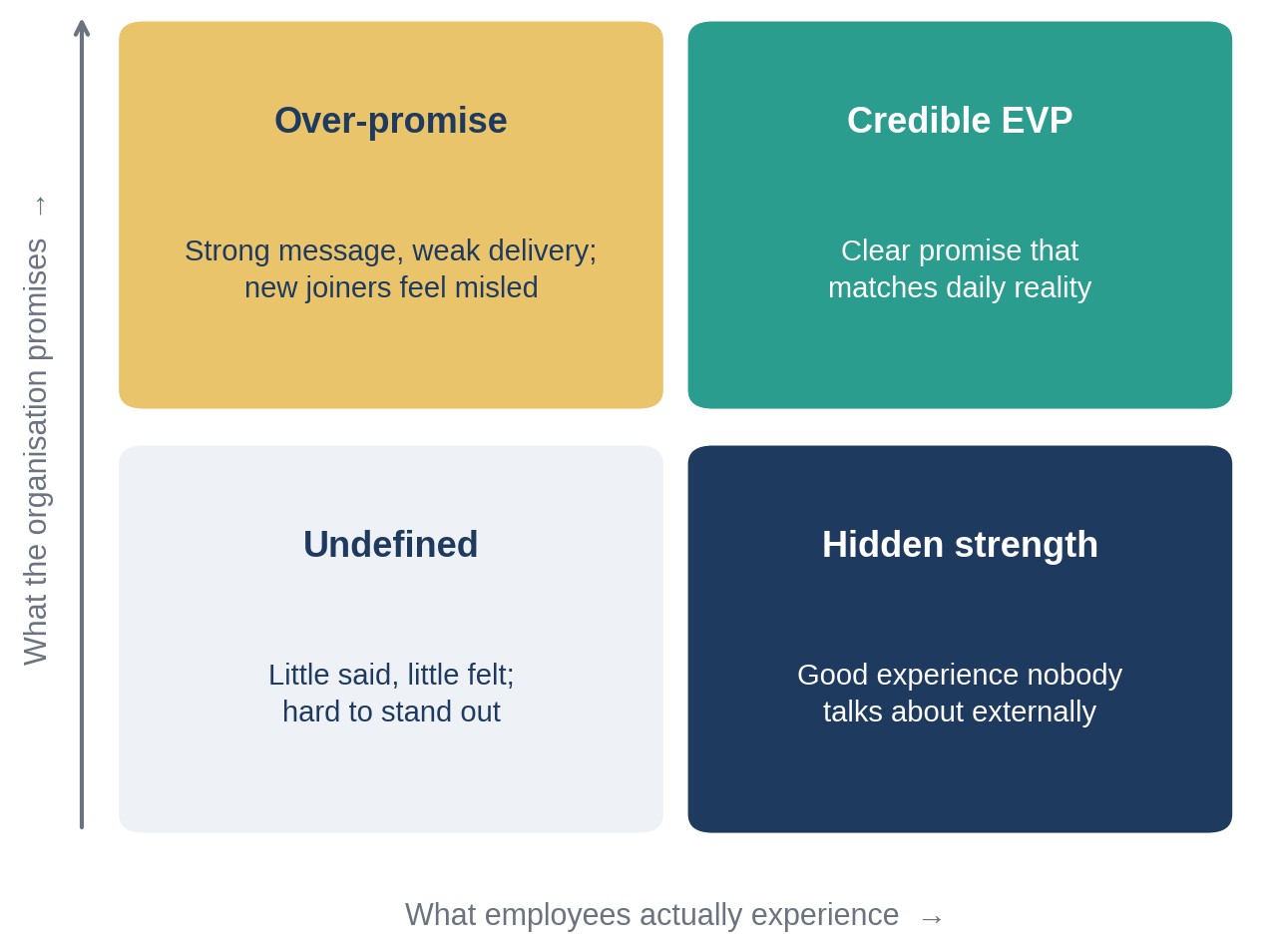
An EVP is credible only when the promise and the daily experience match

The most damaging position is the top left: a strong promise that daily life does not match. New joiners notice within weeks, and the disappointment shows up in early resignations. The bottom right is a missed opportunity, where the organisation offers more than it says.

Building an EVP in four steps

1. Listen first

Gather evidence from current employees through survey data, focus groups and stay interviews. Ask what keeps them, what they would tell a friend about working here, and what they would change. Exit data shows what the EVP is failing to deliver.

2. Identify what is distinctive

Most employers offer competitive pay and decent benefits. Look for what is genuinely different: the type of work, the pace of growth, the quality of development, the stability, the people. Two or three distinctive themes are enough.

3. Write it plainly

Describe each theme in language employees would recognise. Avoid generic phrases such as "a great place to work" or "passionate people". If a statement could appear on any company's website, it does not belong in yours.

4. Check it against reality

For each theme, ask what evidence supports it and where it falls short. If you promise development, is there a training budget people actually use? If you promise growth, do people get promoted from within?

EVP themeEvidence it is realWhere it may fall short
DevelopmentFunded learning, internal promotions, coachingBudgets cut first when times are tight
StabilityLong tenure, consistent leadershipCan read as slow to change
ImpactSmall teams, visible resultsWorkload and pace
RecognitionRegular, specific recognitionInconsistent between managers

Using the EVP

An EVP is useful only when it is used consistently: in job adverts and interviews, in onboarding, in manager conversations and in how the organisation explains its reward and development offer. It should also guide decisions. If a proposed change cuts against the EVP, that is worth discussing before it goes ahead.

Keeping it honest

Revisit the EVP every year or two, using engagement and exit data. As the organisation changes, the offer changes, and the words should keep up.

How Humatix can help

Humatix helps UAE and GCC organisations define and test their employee value proposition, using engagement surveys, focus groups and reward analysis to make sure the promise matches the experience.