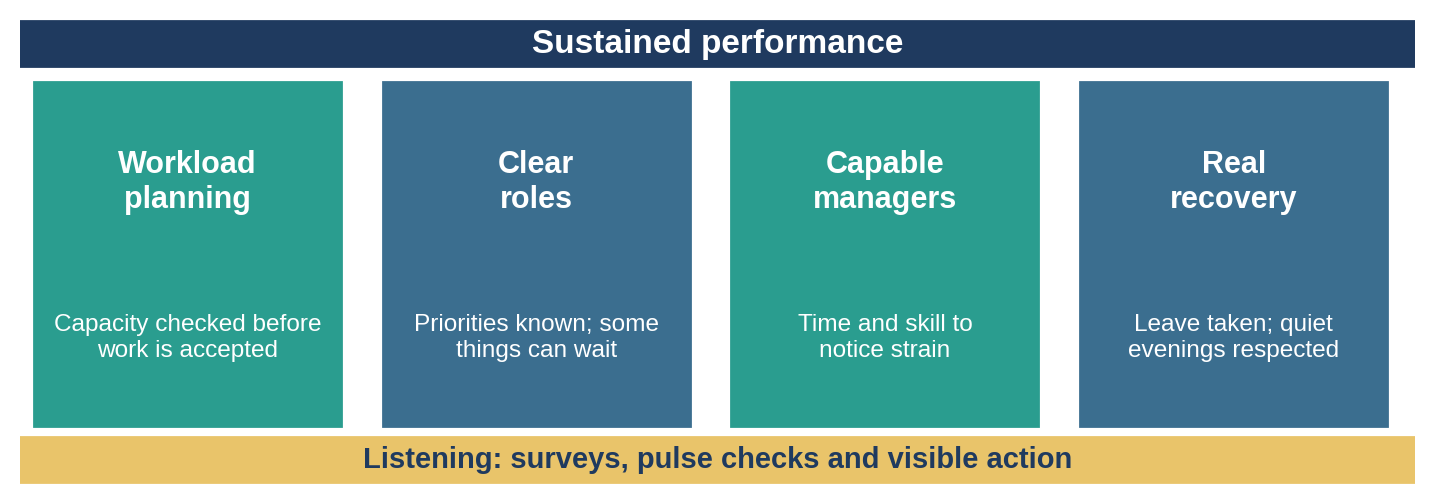
Workload planning. Capacity is checked before new work is accepted, and predictable peaks are staffed in advance.
Clear roles. People know what they own, what comes first this month and what can wait.
Capable managers. Managers have the time and skill to check in, reset priorities and spot strain early.
Real recovery. Leave is taken, out-of-hours contact is the exception, and nobody returns from holiday to a mountain of work.
These supports matter more in the UAE than they might elsewhere. Many employees are far from extended family, some support relatives overseas, and pressure at home and at work can build together. Fast-growing firms often expect existing staff to absorb extra work until new hires arrive. In some teams, constant availability is treated as proof of commitment, which makes admitting strain harder. And because skilled people have options, unsustainable roles usually end in resignations.
Why engaged people are not always feeling great
It is tempting to assume that highly engaged employees are fine. Often they are the ones most at risk, because dedication can hide exhaustion until it becomes serious. Satisfaction, engagement and well-being answer three different questions, and a survey designed only to measure the first can miss the other two.
Measuring what matters
Keep your core survey questions, and add a small set that tests sustainability.