← Back
Organisational Design5 min read21 October 2026

Organisation Design for Agility: How GCC Firms Can Respond Faster

Organisational design for agility in the GCC: push decisions down, review spans and layers, use cross-functional teams and avoid badly designed agility.

GCC markets move quickly. New regulations arrive, government programmes open up sectors, international competitors enter and customer expectations rise. Businesses that can respond in weeks rather than quarters pull ahead.

The obstacle is rarely effort. It is usually structure: approvals queue at the top, teams wait on other teams, and nobody is quite sure who can say yes.

Agility is not the absence of structure

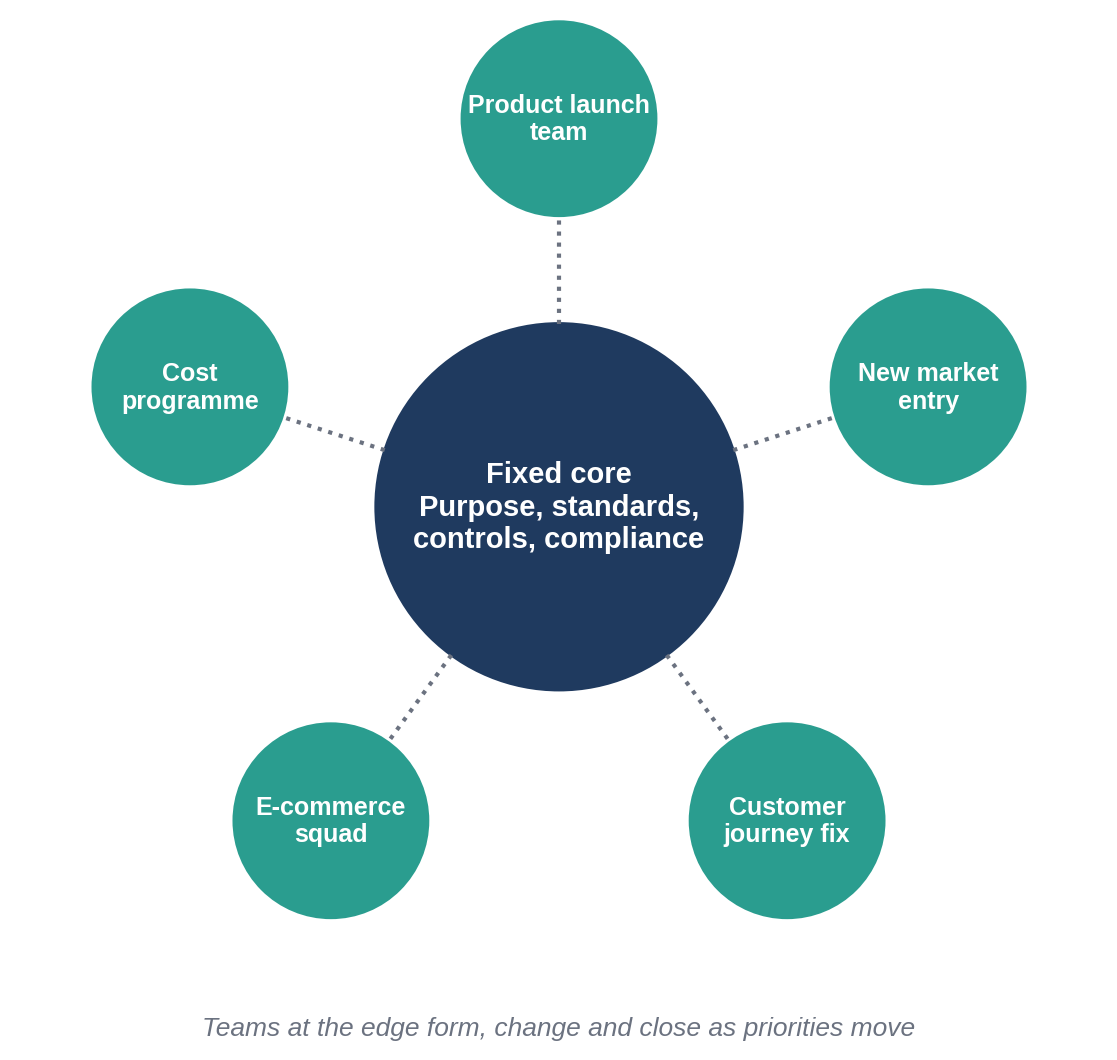
Agile organisations tend to combine two things: a fixed core that does not move, and adaptable edges that do.

Stable core, adaptable edges

A stable core of standards and controls, with teams at the edge that form and close as priorities change

The core covers purpose, common standards and processes that must not vary, such as safety, compliance and financial controls. The edges are teams that can be set up, reshaped or closed as priorities change. Remove the core and flexibility becomes improvisation. Remove the edges and the core slowly hardens into bureaucracy.

The organisation design work that holds up best starts from how a particular business actually operates, not from a so-called best practice model. Structures borrowed from elsewhere often struggle because they ignore the nuances that make the business work: how decisions are really made, the regulatory setting, where expertise sits. The right design is the one that fits your company, even if it looks different from a competitor's.

Five levers

1. Move decision rights closer to the work. List the decisions that most often cause delay: hiring approvals, pricing exceptions, small spend, customer concessions. For each, ask who has the information to decide well and how much risk is involved. Delegate routine, low-risk decisions. Keep riskier ones senior, but with an agreed response time. Publish the result so people stop seeking approvals they already hold.

2. Review spans and layers together. Every layer between the front line and a decision-maker slows things down. Very narrow spans often signal roles created for title or grade. Very wide spans leave managers too stretched to coach or clear obstacles. The right span depends on how standardised the work is, how experienced the team is and how much hands-on work the manager carries. Removing a layer also means giving the remaining managers wider authority and the support to use it.

3. Organise cross-functional teams around outcomes. Some work, such as launching a product, entering a new market or fixing a customer journey, cuts across departments. A dedicated team with members from each function usually moves faster than a chain of hand-offs. Give it a clear outcome, a named lead and a deadline, and decide early how members will be assessed. Someone evaluated only by a line manager elsewhere will put that department's priorities first.

4. Make accountability explicit. Name one accountable owner for every major process or initiative, however many people contribute. Short role profiles setting out each role's decisions, outputs and key interfaces save a surprising amount of time.

5. Make resourcing more flexible. Options include a small pool of versatile staff who rotate between priorities, quarterly rather than annual budget reallocation, and deliberate use of partners or contractors for peaks. In the GCC, many employees hold employer-sponsored visas, and rules differ between countries and, in the UAE, between mainland and free zone licences. Transfers, secondments and contractor arrangements need to fit those rules.

Functional, matrix or hybrid?

–FunctionalMatrixTeam-based hybrid
How it worksGrouped by disciplineTwo reporting lines: function and product, region or projectFunctional backbone plus cross-functional teams for priority work
StrengthsDepth of expertise, clear careers, efficient for steady workCombines expertise with outcome focus; shares scarce expertsKeeps standards while moving fast on priorities
WeaknessesSlow for cross-department workConflicting priorities without strong governanceNeeds clear rules on membership and evaluation
Best whenWork is stable and specialisedLeaders can manage shared priorities wellSeveral priorities cut across functions

Debating structure types in the abstract is less useful than finding where delays actually come from. If they come from hand-offs between departments, cross-functional teams should help. If they come from unclear priorities, a matrix will make things worse until the priorities are settled.

A retail group operating in several GCC countries might keep legal, procurement and finance functional for consistency, while running new store openings and e-commerce through cross-functional teams, each with one accountable owner.

When agility backfires

  • Blurred ownership: many teams influence an outcome, none answers for it.
  • Meeting overload: coordination crowds out decisions.
  • Constant restructuring: people stop investing in an organisation that keeps changing shape.
  • Diluted expertise: specialists spread across teams lose shared standards.
  • Weak controls: authority delegated without finance or compliance guardrails.

The fix is usually to strengthen the core, not add more flexibility.

A starting checklist

  • Name the ten decisions that most often stall the business, with an owner and a response time for each.
  • Count the layers from front line to chief executive in each function and challenge any that only pass information on.
  • Pick two or three priorities that need cross-functional teams, and set their lead, outcome, deadline and membership.
  • Write down what stays fixed: standards, controls and compliance duties.
  • Review people and budget allocation quarterly.

How Humatix can help

Humatix supports GCC businesses with organisation design: reviewing spans and layers, clarifying who decides what, defining accountabilities by role and aligning job levels and grading with the new structure.

Note: legal or tax advice should be sought on the legal and tax matters referred to in this article, as requirements vary by jurisdiction and change over time.

Organisational Design for Agility in the GCC