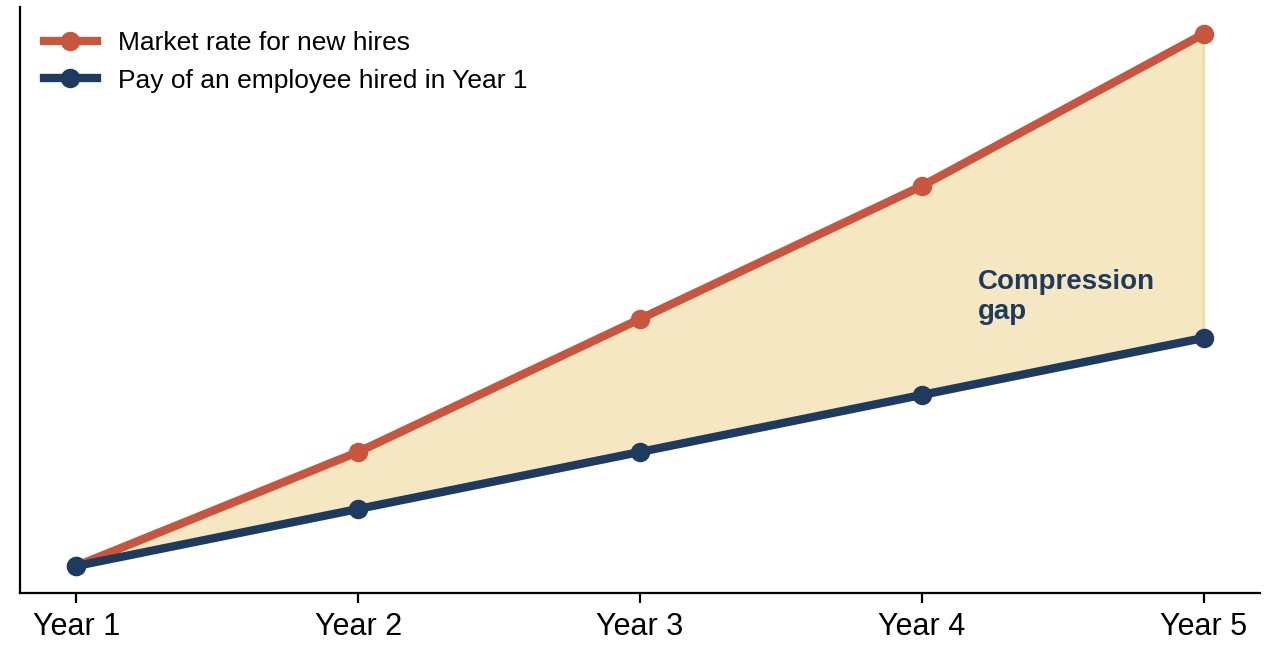
Compression usually comes from one of three sources:
- Market movement. Offers to new hires follow the current market, while existing staff move only at the pace of the annual review budget.
- Tight skill markets. Scarce skills command premium offers that may not be extended to people already in similar roles.
- Promotion without adjustment. Someone promoted into a grade may sit below colleagues hired directly into it.
Why it matters
Employees talk about pay, even where policy says they should not. When a long-serving employee learns that a newcomer earns more for similar work, the message they hear is that loyalty is not valued. Many will test the market, and since the market is exactly what is driving new hire pay, they will often find a better offer.
Compression also distorts the salary structure. Ranges lose meaning when pay inside them is driven by date of hire rather than contribution.
Spotting it
You can test for compression with data you already hold.