Most of this can be produced from your HR system, provided reporting lines are accurate. Checking that they are is often the first finding.
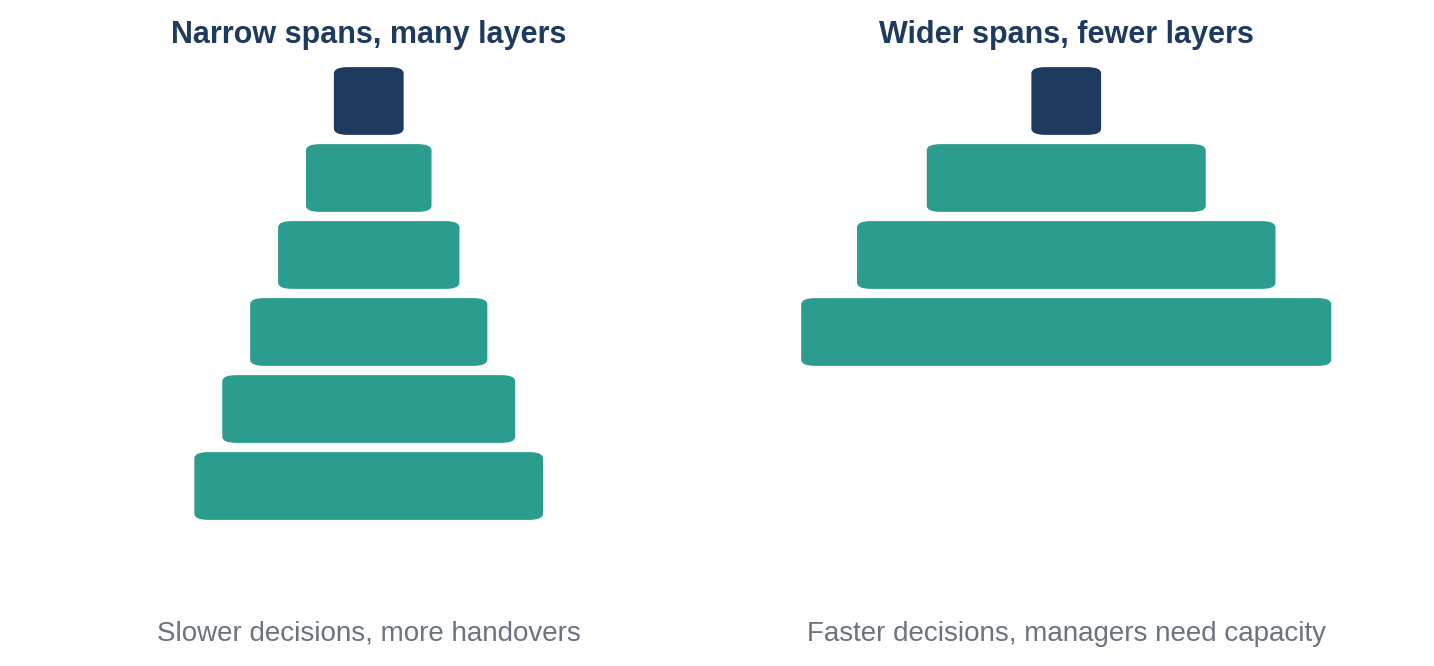
What is the right span?
There is no single correct number. The right span depends on the work.
- Wider spans suit teams doing similar, well-defined work, with experienced people and good systems.
- Narrower spans suit complex, varied or highly specialised work, new or inexperienced teams, and managers who also carry significant individual work of their own.
The useful question is not whether a span is above or below an average, but whether it fits the work in that team. A customer service supervisor with twelve agents may be well placed. A head of legal with twelve reports across very different specialisms probably is not.
Reading the results
Look for patterns rather than individual cases.
- Many layers in one function compared with others of similar size suggests the structure has grown by addition.
- Clusters of single-report managers usually indicate roles created for grade or title reasons.
- Very wide spans in growing teams suggest managers are stretched and team leads may be needed.
- Inconsistent layer counts for similar roles across departments often point to grading problems too.
Acting on the findings
A review should lead to a few clear decisions, not a wholesale restructure.
- Agree design principles for spans and layers with leadership.
- Focus on the parts of the organisation where the gap from those principles is largest.
- Consider alternatives to removing roles, such as converting single-report manager roles into senior specialist roles.
- Where reporting lines change, update decision rights and grades at the same time.
- Repeat the measurement in a year to check progress.
Changes that affect individual roles need careful planning and communication. The aim is a structure that works better, not a headcount exercise in disguise.
How Humatix can help
Humatix runs organisation diagnostics for UAE and GCC employers, including spans and layers analysis, and helps leadership teams turn the findings into practical changes to structure, roles and grading.